
- Net worth
- Unknown
- Crimes
- other fraud, other
- Convicted of
- Possessing and dealing counterfeit money
- Original sentence
- Five years' imprisonment; $10,000 fine (September 1983)
- Time served
- Two and a half years (released 1985)
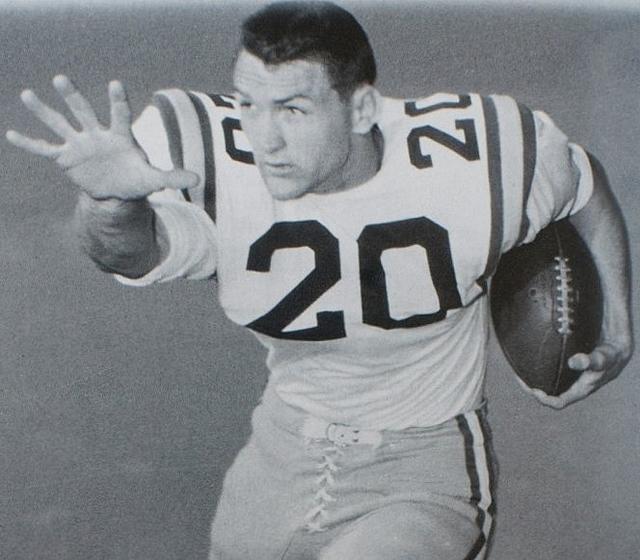
Unknown photographer / Wikimedia Commons, Public Domain
Background
Billy Cannon was a former professional football player who won the 1959 Heisman Trophy while playing for Louisiana State University. He is remembered for one of the most memorable plays in college football history: an 89-yard punt return for a touchdown against Ole Miss on Halloween night 1959. Cannon played in the NFL and AFL from 1960 to 1970 for the Houston Oilers, Oakland Raiders, and Kansas City Chiefs. He was a two-time All-Pro player and a two-time Pro Bowler. After his football career, Cannon became an orthodontist. He died on May 20, 2018, at age 80.
The Case
Cannon pleaded guilty in July 1983 to possessing and dealing counterfeit money after federal marshals discovered two ice coolers filled with bogus $100 bills that Cannon had hidden. The counterfeiting scheme involved approximately $6 million in counterfeit $100 bills, described as the biggest counterfeiting operation ever discovered in the U.S. at that time. At the time of his arrest, Cannon was a successful orthodontist whose practice grossed over $300,000 annually and was involved in real estate investing.
Cannon agreed to testify against three other men involved in the counterfeiting ring in exchange for consideration from the court. He was sentenced to five years in federal prison and ordered to pay a $10,000 fine. He reported to the Federal Correctional Institution in Texarkana, Texas in September 1983 and ultimately served two and a half years before being released in 1985.
Counterfeiting undermines the integrity of the U.S. currency system and harms the economy. When counterfeit bills enter circulation, businesses and individuals suffer financial losses when they unknowingly accept fake currency. Large-scale counterfeiting operations like Cannon's damage public trust in the monetary system and can destabilize confidence in U.S. currency. The conduct harmed businesses, individuals, and the integrity of the financial system.
Following his arrest, the College Football Hall of Fame revoked Cannon's induction. He was later re-inducted in 2008.
The Pardon
On February 12, 2026, President Trump granted Cannon a full pardon posthumously. The pardon was announced by White House pardon czar Alice Marie Johnson.
Sources
- DOJ Pardon Warrant (Feb 12, 2026)
- DOJ Clemency Grants
- Trump pardons 5 former NFL players for crimes ranging from perjury to drug trafficking (AP, Feb 2026)
- Billy Cannon, 1959 Heisman Trophy winner later convicted of counterfeiting, dies at 80 (Washington Post, May 2018)
- The Cannon Counterfeit Case Is a Perplexing One (The Oklahoman, Jul 1983)
- A transcript of a tapped telephone conversation shows former... (UPI Archives, Sep 1983)