
- Net worth
- Unknown
- Crimes
- drug trafficking, weapons, conspiracy
- Convicted of
- Conspiracy to import cocaine into the United States; possessing machine guns and destructive devices in furtherance of the cocaine importation conspiracy; conspiracy to use and carry machine guns and destructive devices
- Original sentence
- 540 months' imprisonment; five years' supervised release; $8,000,000 fine (June 26, 2024)
- Time served
- ~17 months before pardon
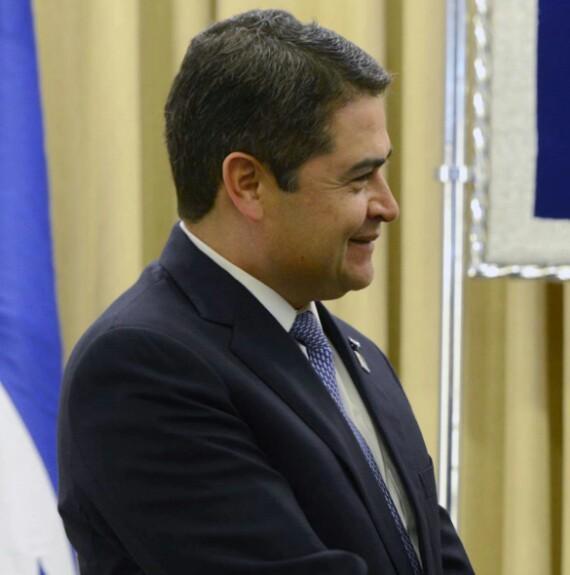
Mark Neyman / Government Press Office of Israel, CC BY-SA 3.0
Background
Juan Orlando Hernandez is the former President of Honduras (2014–2022). He was extradited to the United States in 2022 to face federal drug trafficking and firearms charges.
The Case
In March 2024, Hernandez was convicted in the Southern District of New York of conspiracy to import cocaine into the United States, possessing machine guns and destructive devices in furtherance of the cocaine importation conspiracy, and conspiracy to use and carry machine guns and destructive devices. Prosecutors alleged that during his presidency he used the Honduran military and police to protect drug shipments bound for the United States and accepted millions of dollars in bribes from drug traffickers, including leaders of the Sinaloa and other cartels. He was sentenced in June 2024 to 45 years (540 months) in prison, five years of supervised release, and an $8 million fine. His conduct facilitated the flow of cocaine into the United States, strengthened violent cartels, and corrupted institutions in Honduras, harming communities in both countries.
Hernandez's political career included additional serious violations. While serving as president of Honduras' National Congress in 2012, he orchestrated the removal of the country's supreme court justices, an action critics characterized as a constitutional coup. His 2017 presidential reelection campaign violated constitutional term limits, and during the ensuing protests, Honduran security forces killed at least 16 people, including two children, according to United Nations documentation of election-related human rights violations.
The Pardon
On December 1, 2025, President Trump granted Hernandez a full pardon. The pardon was announced just before Honduras' presidential election, with Trump publicly supporting National Party candidate Nasry "Tito" Asfura and suggesting U.S. aid would be conditional on the election outcome. Political operative Roger Stone reportedly facilitated the pardon by delivering a letter from Hernandez to Trump in which Hernandez claimed he was a victim of political persecution.
Following the pardon, Hernandez received preferential treatment that departed from standard federal prison release procedures. He had an active immigration detainer that typically would have resulted in immediate transfer to ICE custody, but federal prison officials worked to have the detainer lifted, allowing him to be released directly. Immigration attorneys noted that removing detainers for individuals convicted of drug offenses is rare. Additionally, the Bureau of Prisons arranged for a tactical team to transport Hernandez from Hazelton Federal Correctional Institution in West Virginia to a luxury hotel in Manhattan, with staff receiving overtime pay for the assignment. Prison employees described this level of assistance as highly unusual. Prior to his release, Hernandez was permitted to use a prison captain's phone to contact Bureau of Prisons deputy director Joshua Smith, another recipient of a Trump pardon.
Hernandez's current location is not publicly known. He posted on social media that he would not return to Honduras due to safety concerns for himself and his family. Honduran authorities have issued an arrest warrant related to fraud charges and requested Interpol cooperation, but no active Interpol red notice exists at this time.